
The Making of a Superior Man
Roughly half the world’s population is male, most of whom are focused on securing food, shelter, sex, and safety. They exist more than they live.
A smaller number evolve into men—individuals capable of commitment, often devoted to a cause greater than themselves; sometimes, a cause they’re willing to die for. A male wants to make love to a thousand women. A man wants to make love to the same woman a thousand times.
Fewer still become superior men. Willing to give more than they take, these men have traveled the forty-year journey from the head to the heart—and found the Promised Land within.
The Bible tells us that after escaping Egypt, the enslaved Israelites wandered the Sinai Desert for forty years before entering the Promised Land. This story always puzzled me. The Sinai is barely the size of Maryland. No one wanders that long unless what they’re searching for isn’t on any map. And there is no archaeological record of such a journey.
But perhaps the story was never meant to be taken literally. Like Abraham Maslow’s hierarchy of needs—mirroring the seven chakras of India and the sephirot of Hebrew Kabbalah—the Exodus is a spiritual map. The journey from material to spiritual, from survival to sovereignty, is an inward one.
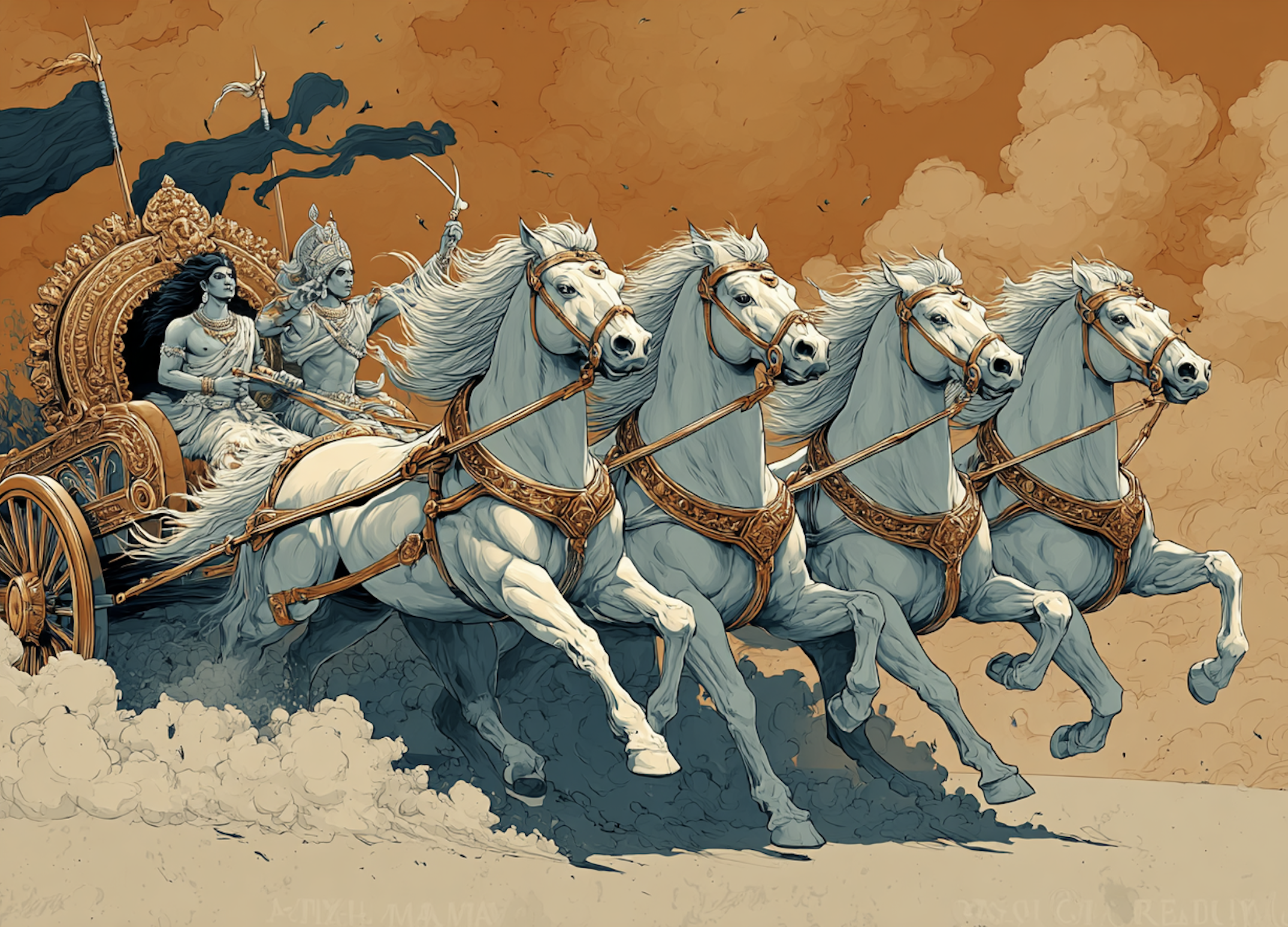
Nowhere is this better illustrated than in the Bhagavad Gita, where the hero-warrior Arjuna hesitates on the battlefield. His charioteer, Lord Krishna, urges him to act without attachment to outcome. In this metaphor, the chariot is the body, the five horses our senses, the reins the mind, Krishna the intellect, and Arjuna the soul. The superior man strives to align all these parts.
The Promised Land is within.
— Sina.