
Iran
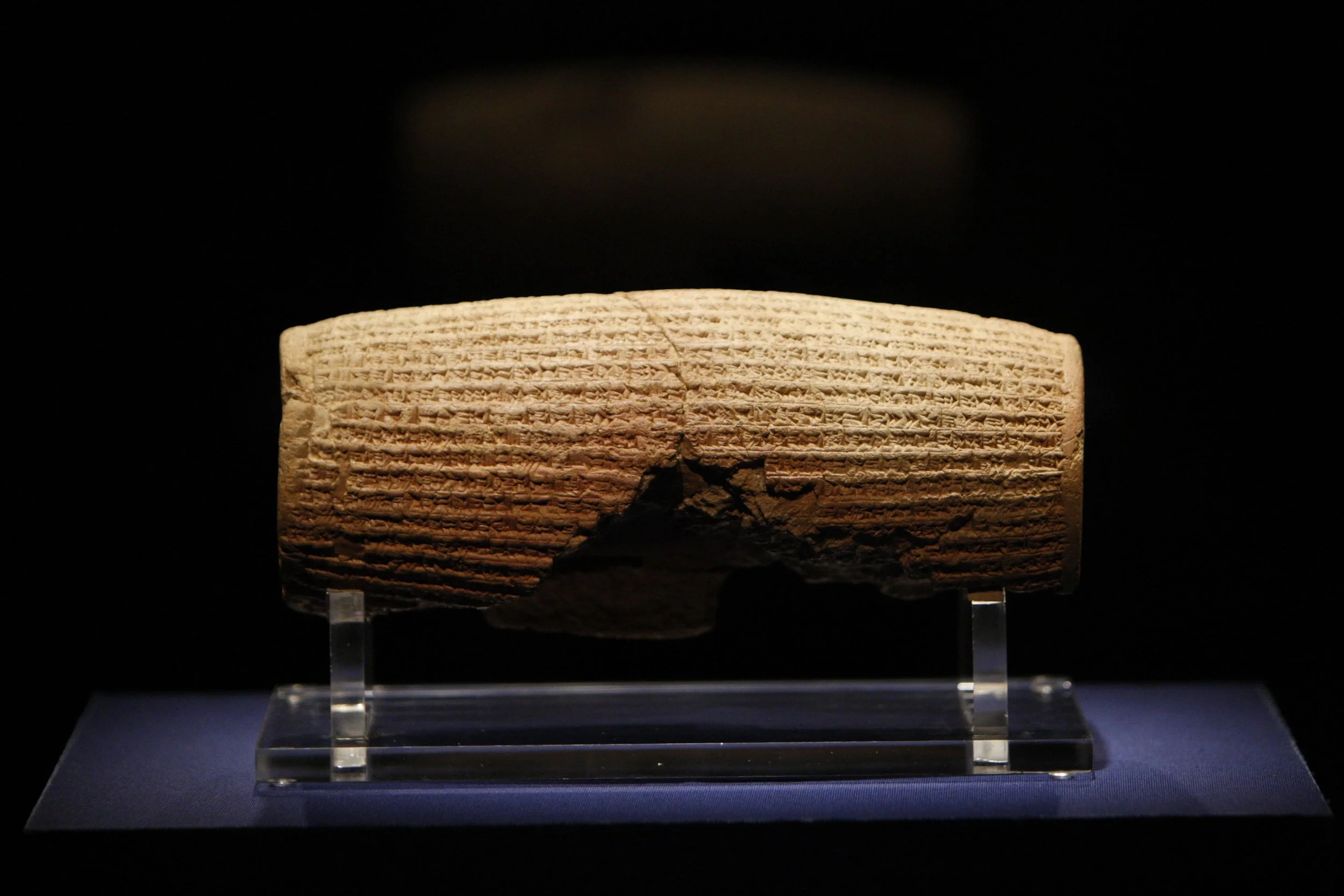
THE CYRUS CYLINDER (6TH CENTURY BC)
The philosophical roots of America’s Declaration of Independence stretch back to ancient Israel and Greece—and further still, to King Cyrus the Great of Persia. More than 2,500 years ago, Cyrus built one of the largest empires of the ancient world. Unlike many conquerors of his time, he allowed subjugated peoples to maintain their customs and religions. The Cyrus Cylinder, dating to the 6th century BC, is often described as an early charter of human rights because it records his policy of tolerance and liberation.
Long before Islam, Persians largely followed Zoroastrianism, one of the world’s oldest monotheistic religions. In the 7th century, Arab Muslim armies conquered Persia. Over time, Islam became the dominant religion. Yet Persian identity endured. Unlike some other conquered societies that assimilated more fully into Arab culture, Persians preserved their language, literature, and historical memory.
A thousand years ago, the great Persian poet Ferdowsi composed the Shahnameh (Book of Kings), a monumental epic that preserved Iran’s pre-Islamic history and mythology. Through poetry, he safeguarded a civilizational identity that might otherwise have been lost.
In 1979, Iran’s Islamic Revolution overthrew the Shah and established the Islamic Republic. The new regime seized 52 American diplomats and citizens, holding them hostage for 444 days. Since then, tensions between Iran and the United States have shaped decades of geopolitical conflict. The Islamic Republic has supported armed groups across the region and pursued advanced missile and nuclear capabilities, while chanting “Death to America,” and calling Israel a “One bomb country.”
Today, many Iranians distinguish between their ancient Persian heritage and the ruling theocracy. The protest movement that gained global attention in recent years rallied around the slogan “Woman, Life, Freedom”—a call for dignity, autonomy, and fundamental rights.
History moves in cycles. Civilizations endure. No regime is permanent, and no people are destined for perpetual repression. May the Iranian people prevail in their pursuit of liberty, justice, and self-determination. May their future be shaped not by fear, but by freedom.
— Sina.