
The God of Fear
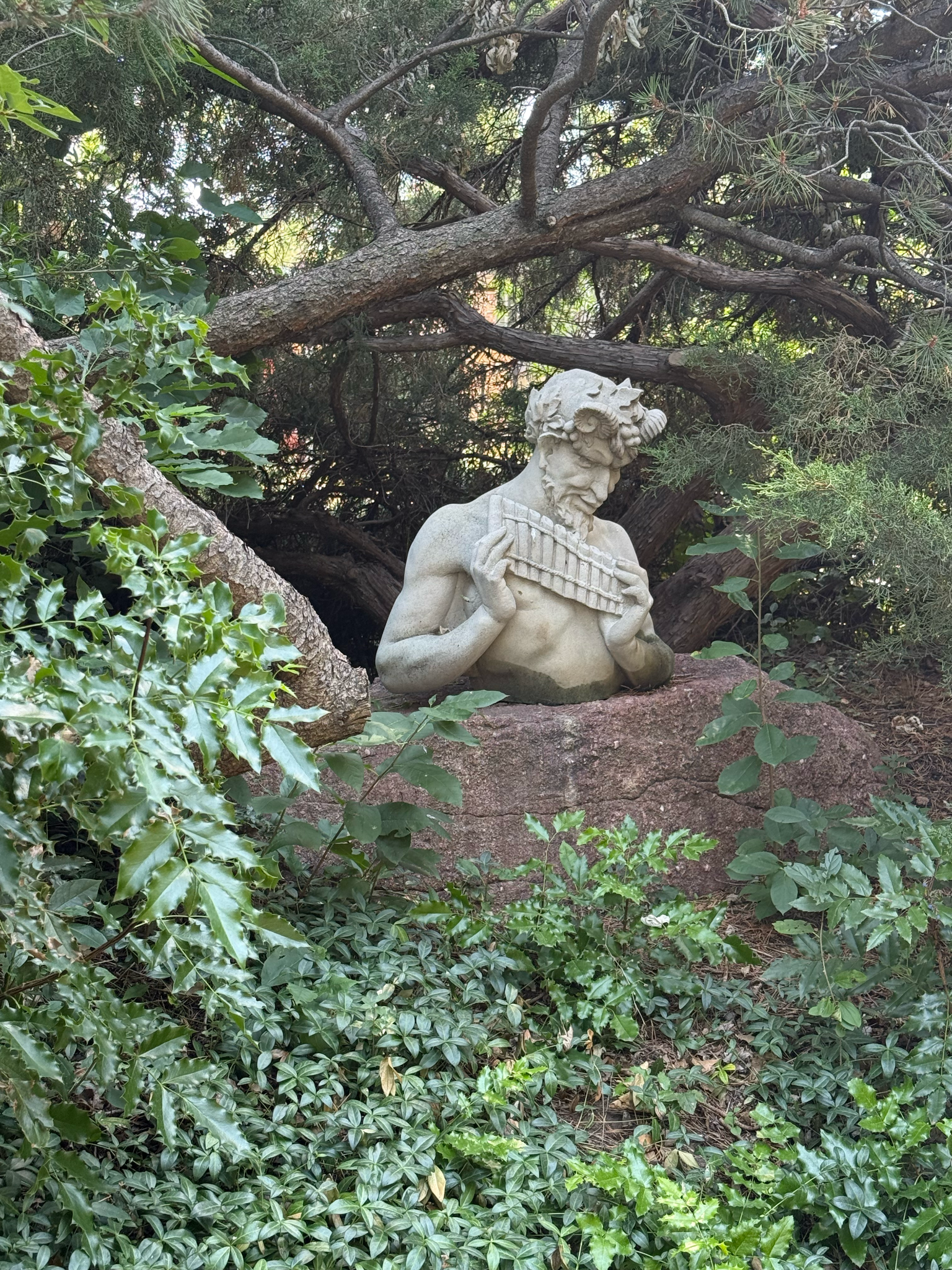
The Pan Sculpture, partially hidden in Historic Highland’s Award-Winning whimsical gardens.
Few commands appear more often in the Bible than, “Do not be afraid.” Yet the ancient Greeks understood something more keenly about fear in their worship of a curious god named Pan.
Half man and half goat, he lived in the wilderness, hidden among forests and mountains. Travelers who unexpectedly encountered him were said to be overcome by sudden, irrational terror. From his name comes our word panic.
The Greeks understood something about human nature that we often forget. Fear can arrive without warning. It can spread rapidly until an entire society sees danger everywhere. Every generation believes it is living through history’s greatest crisis.
In my lifetime, we have feared nuclear annihilation, the population explosion, global famine, environmental collapse, Y2K, financial meltdowns, pandemics, and now artificial intelligence. Each threat contained genuine risk. Yet each also inspired predictions that civilization itself was on the verge of ending.
History offers a more hopeful story.
Human beings are remarkably adaptable. So is the Earth. We solve problems, invent new technologies, revise old assumptions, and recover from setbacks that once seemed insurmountable. The future is rarely as catastrophic as our fears predict, or as great as our optimists imagine.
Perhaps that is Pan’s enduring lesson. He startles us awake. He forces us to question old assumptions and see the world with fresh eyes. But he is a poor guide for making decisions. Panic narrows our vision precisely when wisdom requires us to see more broadly.
Fear is a messenger, not a master. It can alert us to danger, but it should never dictate our response.
At Highland Institute, we strive to create a Securus Locus—a safe place where members replace fear with inquiry and channel their energy into solving problems rather than rehearsing disasters. We seek to replace the heat of fear with the light of understanding.
Pan may awaken us, but he should never lead us. The future belongs to those who respond with courage, creativity, and action.
— Sina.