
Never Again?!
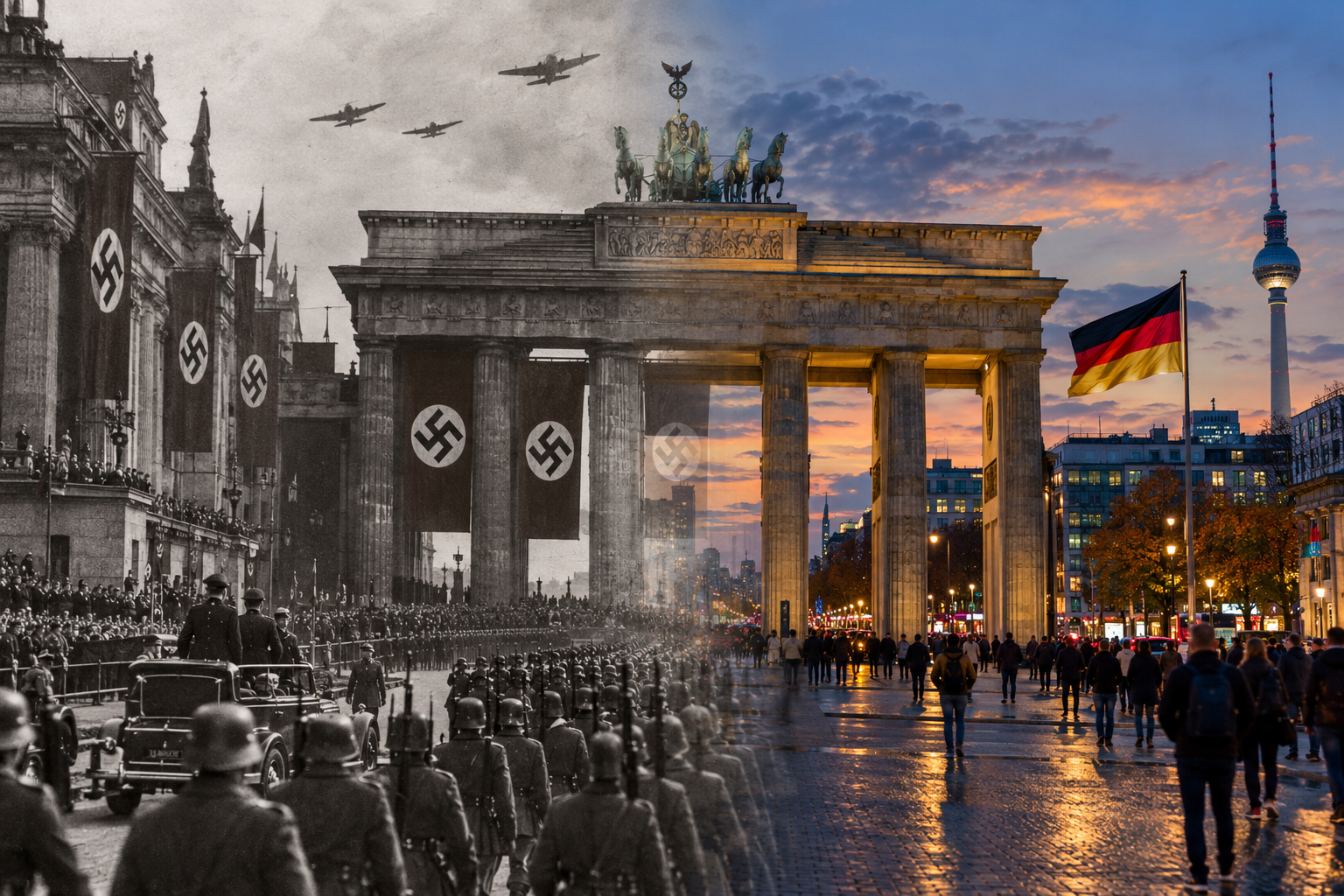
Last week I wrote about France and the Jews as the canary in the coal mine. Today, I look east to Germany.
Germany spent eighty years answering one question: How could the country of Goethe, Beethoven and Kant also become the country of Hitler, Auschwitz and the Final Solution?
Perhaps we should ask another: What happens when Germans become angry again?
For decades, postwar Germany built its identity around prosperity, democracy, European integration and Nie wieder—never again. Then Angela Merkel opened Germany’s doors during the 2015 migrant crisis, ultimately admitting more than a million asylum seekers.
The humanitarian impulse was admirable. The consequences remain contested.
Today Germany faces economic stagnation, immigration anxiety, political fragmentation and growing dissatisfaction with the establishment. The AfD, once dismissed as a fringe movement, has become a major political force, particularly in the former East.
I would add another ingredient: nostalgia.
People rarely become nostalgic for concentration camps or secret police. They become nostalgic for an imagined past—when streets felt safe, borders meant something, society shared common values and their country seemed confident in itself.
That distinction matters. Opposing mass immigration does not make someone a Nazi. Neither does voting against the political establishment.
But history teaches something uncomfortable about human beings, not merely Germans. When people lose faith in institutions, fear cultural displacement and conclude that elites no longer represent them, they start looking for alternatives, and eventually for someone to blame.
Germany once demonstrated how quickly a sophisticated civilization can descend into barbarism.
The question isn’t whether Germans are capable of doing it again.
The frightening question is whether any of us are.
Never again is not a promise.
It is a responsibility.
— Sina.