
The Blue Wave
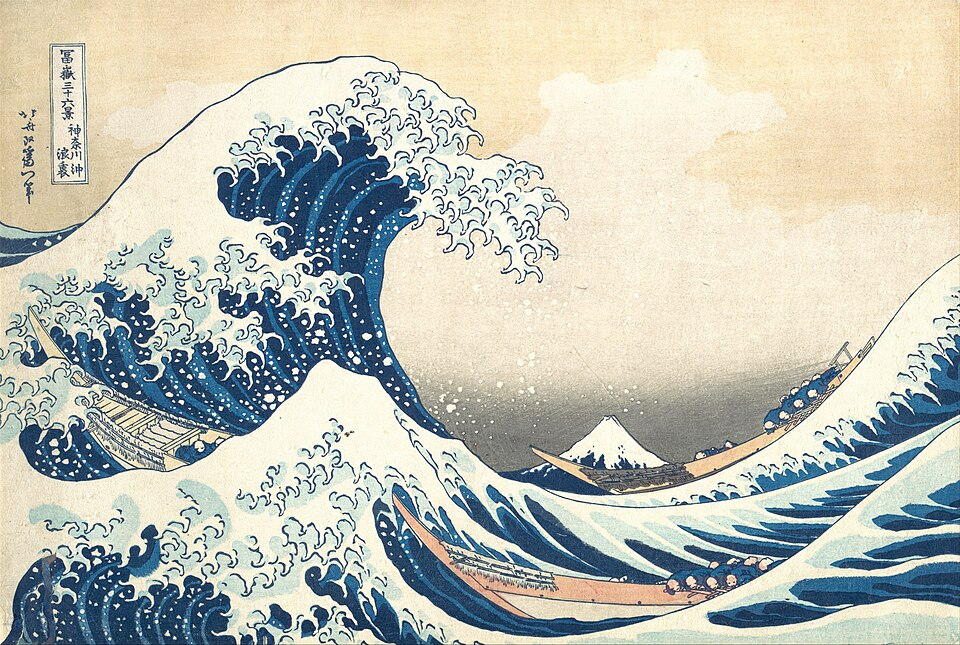
The Great Wave off Kanagawa by the Japanese artist Hokusai (1760–1849)
Last week, I celebrated the winners of America’s midterm elections. This week, I want to reflect on the nature of winning and losing.
Hokusai’s magnificent The Great Wave off Kanagawa captures a timeless truth: Waves rise, crest, crash, and inevitably give way to the next.
The ancient Chinese symbol of yin and yang offers a similar lesson. Neither force exists independently. Each contains the seed of its opposite. Within every victory lie the seeds of defeat; within every defeat, the possibility of renewal.
November 3 demonstrated that, 250 years into our American experiment, democracy remains remarkably resilient.
What began as predictions of a modest Democratic wave became a tsunami. Democrats captured both houses of Congress, flipping eight Republican Senate seats, including Texas and Mississippi—two states once considered virtually impregnable Republican territory.
Republicans face a reckoning. Trumpism, once an unstoppable political force, may have crested. Their opportunity lies in preserving its better instincts—secure borders, confronting China, strengthening families—while abandoning its excesses.
But Democrats should resist celebrating too enthusiastically. Their coalition contains its own contradictions. The growing influence of democratic socialists, from New York to Los Angeles, threatens to collide with the moderates responsible for much of their electoral success.
Today’s winners may become tomorrow’s losers.
Perhaps that is democracy’s greatest genius. Unlike revolutions that devour their children, our constitutional system allows competing forces to correct one another without destroying the republic.
At Highland Institute, we strive to understand these recurring cycles, recognizing that wisdom rarely resides exclusively on either side.
Rumi reminds us that we are not merely drops in the ocean, but oceans within a drop.
Yet the wave is never the ocean. It is merely energy passing through it.
— Sina.