
Time and Perception
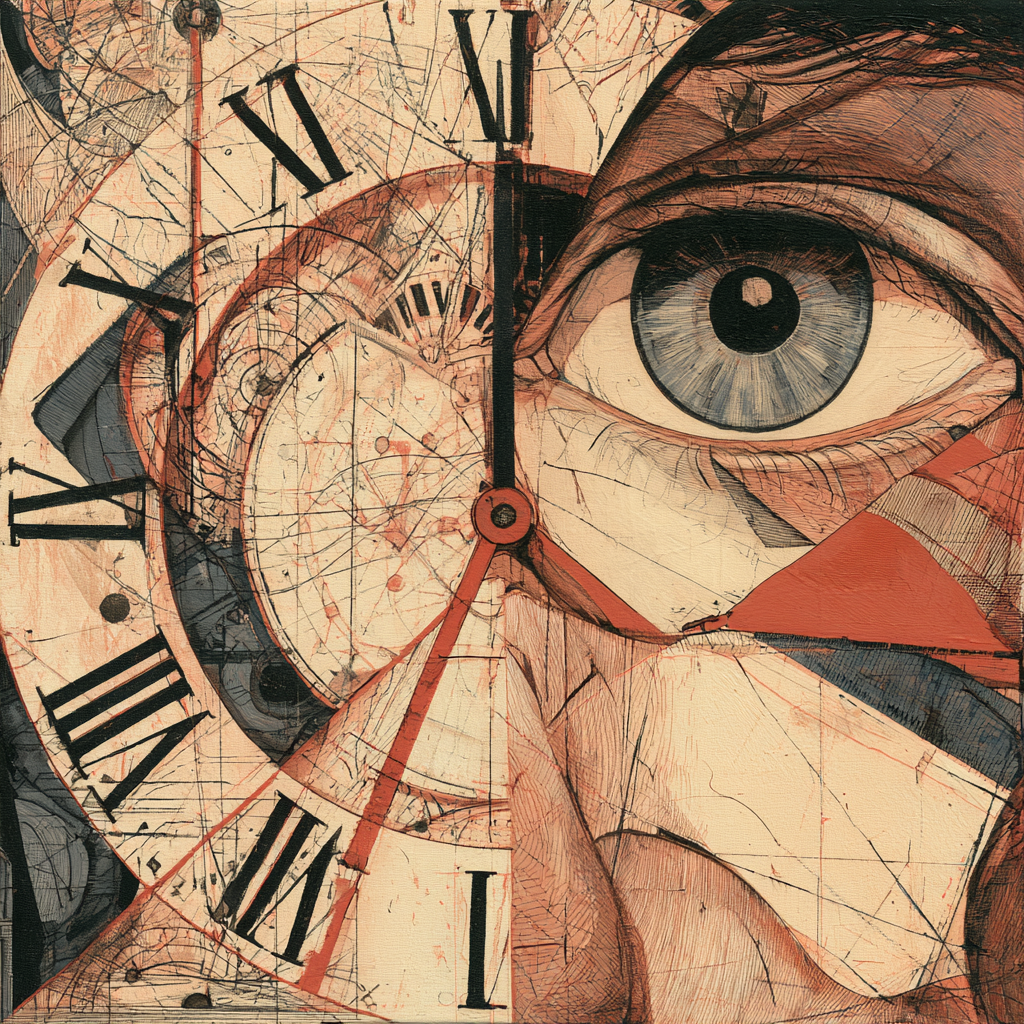
A certain riddle about time and perception has stayed with me for some sixty years through a character named Dunbar in the satirical wartime novel Catch-22. Dunbar, you see, developed a strategy to “lengthen” his life by deliberately making time feel slow by cultivating boredom, “Dunbar loved shooting skeet because he hated every minute of it and the time passed so slowly.”
Fast forward to our focus article for another take on the elasticity of perceived time (click: Your Perception Of Time Is, Indeed, Warped) with the common lament about how the years just seem to just fly by faster and faster particularly as one ages. Let it first be said that the phenomenon has nothing to do with some kind of change in the brain’s internal clock. Also largely dismissed was the so-called time alive theory which states future time represents a smaller and smaller percentage of the increasing time that’s already passed.
No, as it turns out, how we gauge time in the present is totally distinct from how we see it in retrospect. That difference, as it turns out, arises from our capacity to anchor those then-present experiences into our memory. Aha, certain experiences, such as those that are novel and stimulating are readily anchored. The cited example is the way those absorbing real-life episodes of children give the brain more to chew on.
Contrast that with a more dulled, dampened state as we grow older where we become more immersed in patterns and routines, living more by rote. Take as an extreme example the claustrophobic monotony of the three years during the Covid lockdowns in which the weeks and months blended such that every day was “Blursday.” No wonder the anecdotes revealed Americans experiencing time disorientation.
Okay, it’s time for our mandatory dump on the media ecosystem that inundates us with videos, images, and a "cavalcade" of content 24x7 as we again consider the difference between time measured in the present rather than retrospectively. Even as the screens flood us with text and images, our brains are tricked into speeding up that internal mechanism used for measuring time, making time feel like it’s moving faster and faster. The turbulent vortex overwhelms the senses, bypassing the generation of indelible experiences crucial for forming memories. We are confined to an amnesiac state as swaths of time “grow hollow and collapse.”
So what are the takeaways? Above all, protect the children for as long as possible from their everydays devolving into Blursday. Sign them up for Oak’s nature program. Second, slow down and luxuriate in the inherent slowness of time. If that’s a shameless pitch for Member Monday, so be it. Third, perhaps we’ll take on the suggestion to close your eyes for one intolerable minute to more closely attend to the mere feeling of time per se. Or do nothing as you tap into Aldous Huxley’s spaciousness of existence.
Maybe we’ll go skeet shooting.
Please note the following RSVP Policy for Member Monday: RSVP sign-up opens up at 11:00am on Fridays via the City Club weekly Newsletter. Seats are first-come, first-served: the first 14 secure a spot at the table, the last 3 on the couch. Cancellations must be made 24 hours in advance or the standard Social Lunch rate applies.