
Language Instinct?
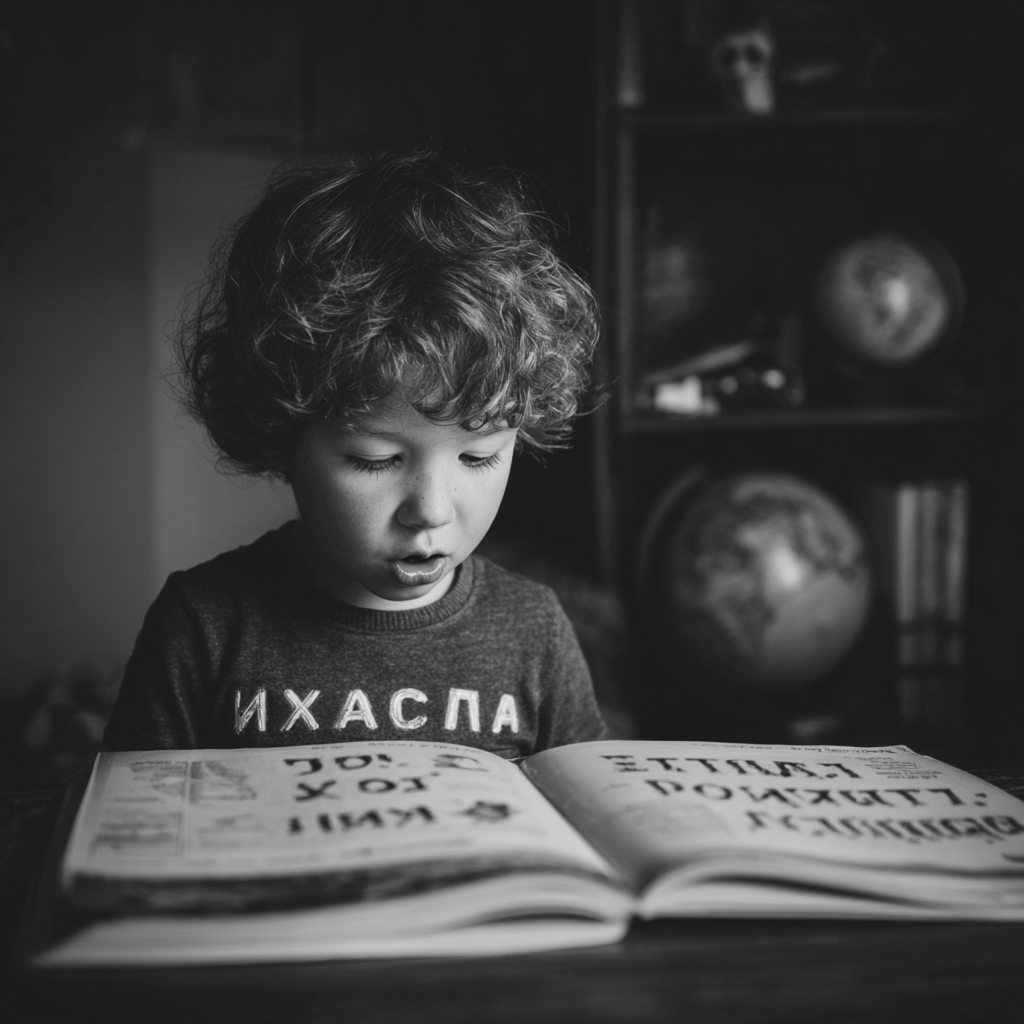
As parents and grandparents know, language acquisition by young children is nothing short of amazing. Infant babbling soon gives way to sounding out words and, with the child already able to decode what adults around them are saying, the two-year-old might, seemingly out of the blue, come out with, “Buffy ate my muffin in the car.” How all does this happen?
For decades, Noam Chomsky theorized that such remarkable advancement is due to the possession by humans of what he called the language instinct i.e. a DNA encoding of a universal grammar anchoring that transforms every cognitively-normal child into a linguistic genius by age four without any formal education. Our discussion piece maintains that such a simple, powerful idea of a language instinct, having dominated linguistic study, is completely wrong (click: Real Talk).
There is, we are told, no language instinct. Nor, probably, a universal grammar anchoring all human languages. Children learn language, as they do many other things, by trial and error. It suggests that children have far more sophisticated learning capabilities than Chomsky foresaw.
While our brains may be “language ready” in the sense we have the right sort of working memory to process sentence-level syntax and a prefrontal cortex with the capacity to use symbols, what is refuted is the claim that knowledge of language itself is somehow encoded in a kind of language software. We are left to wonder, though, how it is that children could work out the rules, say of the working of nouns and verbs, just by listening closely. There has to be something beyond the behaviorist theories of stimulus reinforcement to account for this.
The thrust of the piece seems equivalent to trying to prove a (Chomsky) negative. How, for example, might there be a certain language universality given the astounding number of distinct sounds, some numbering 144, among languages? Or how to account for all the vastly different word order protocols? The almost limitless combination of all the different parts of speech among all the languages would seem to undercut the notion of some baked-in ur-rules.
Much of the attack on the idea of some language instinct also lies in cognitive neuroscience with the dismissal of the notion that there is any dedicated language organ in the brain. Then comes the lack of any evidence of a macro-mutation that could account for such a discontinuity from our pre-verbal ancestors as to any such language instinct. Finally, if it is a human instinct, where does it go in the adult years?
Beats me, I’ll ask my toddler grandson.
Please note the following RSVP Policy for Member Monday: RSVP sign-up opens up at 11:00am on Fridays via the City Club weekly Newsletter. Seats are first-come, first-served: the first 14 secure a spot at the table, the last 3 on the couch. Cancellations must be made 24 hours in advance or the standard Social Lunch rate applies.