
What Pain Reveals
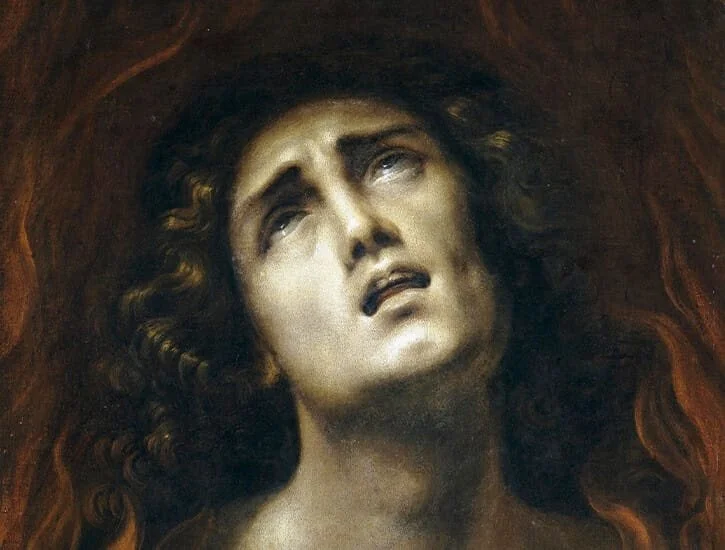
A simple Buddhist reflection goes something like “Today, my body is free from tooth pain, and I notice this gift with gratitude.” Gratitude indeed. One in five U.S. adults is affected by some sort of ongoing physical pain. Add to that the incidence of “psychical pain” and we have an estimated twelve million chronic sufferers out there. That doesn’t even include transitory pain incident to birth, end-of-life, and everything in between, including, yes, that toothache.
What does it all mean ? The armchair philosopher might hold that pain is the path to deep insight, strength, and clarity that emerges when we face suffering without avoiding it. Both ancient philosophy and modern psychology confirm that pain can be a powerful teacher – but only when we reflect on it rather than numb it. Uh huh. Tell that to the woman in labor eyeing the epidural drip.
Our focus piece The Darkness From The Darkness is a review of a book about physical pain that draws on a wealth of cultural references as well as different faith traditions with mentions of Heinrich Heine, Hannah Arendt, George Orwell, Franz Kafka, Kurt Cobain . . . .
. . . . . all capped by the gavel that banged in the closing lines of the cited Randall Jarrell’s poem that titles the focus piece, “The darkness from the darkness. Pain comes from the darkness.// We call it wisdom. It is pain.” As such, what physical pain reveals, the best we could hope for (beyond signalling an otherwise undetected malady), would thereby revert back to that opening Buddhist reflection i.e. simple gratitude for its absence.
As to psychical pain, there are two paradigms when it comes to depression (click: Depression Seen As A Philosophical Problem). One sees it as a chemical imbalance or brain dysfunction, the dominant paradigm despite little evidence to support it. The second paradigm sees depression as a functional signal of the brain that some of our needs are not being met, a useful signal that something is not right. “Depression isn’t pathological; it’s purposeful.”
Let us share instances of pain whether personal or observed in others and reflect on what it might teach such as resilience (growth through suffering), humility, compassion, clarity of values, self-awareness, and authenticity itself. Whether it’s physical or psychical pain perhaps we will discover one positive feature is in its power to connect.
Please note the following RSVP Policy for Member Monday: RSVP sign-up opens up at 11:00am on Fridays via the City Club weekly Newsletter. Seats are first-come, first-served: the first 14 secure a spot at the table, the last 3 on the couch. Cancellations must be made 24 hours in advance or the standard Social Lunch rate applies.