
Awakenings: The Alchemy of Mentorship
“Know thyself,” Socrates insisted. The Enneagram offers a map, Joseph Campbell the narrative, and life itself the proving ground as I strive to evolve from male to man to, hopefully, something finer still.
Since we cannot see our own shadow, we need a guide.
The mentor appears across time and myth. Obi-Wan and Yoda shape Luke Skywalker through instruction and confrontation, teaching him to face his fears, find his purpose, and trust the invisible forces he resists, until he finally embraces them. Then there are Bilbo and Gandalf. Aristotle offered Alexander not just knowledge, but a worldview that helped him fuse discipline with ambition to bend history before the age of thirty-two.
What unites these figures is not teaching, but ignition. A true mentor sees the unrealized self and calls it forward. This often feels uncomfortable. It disrupts, unsettles, and dismantles what we think we know in order to reveal what we might become.
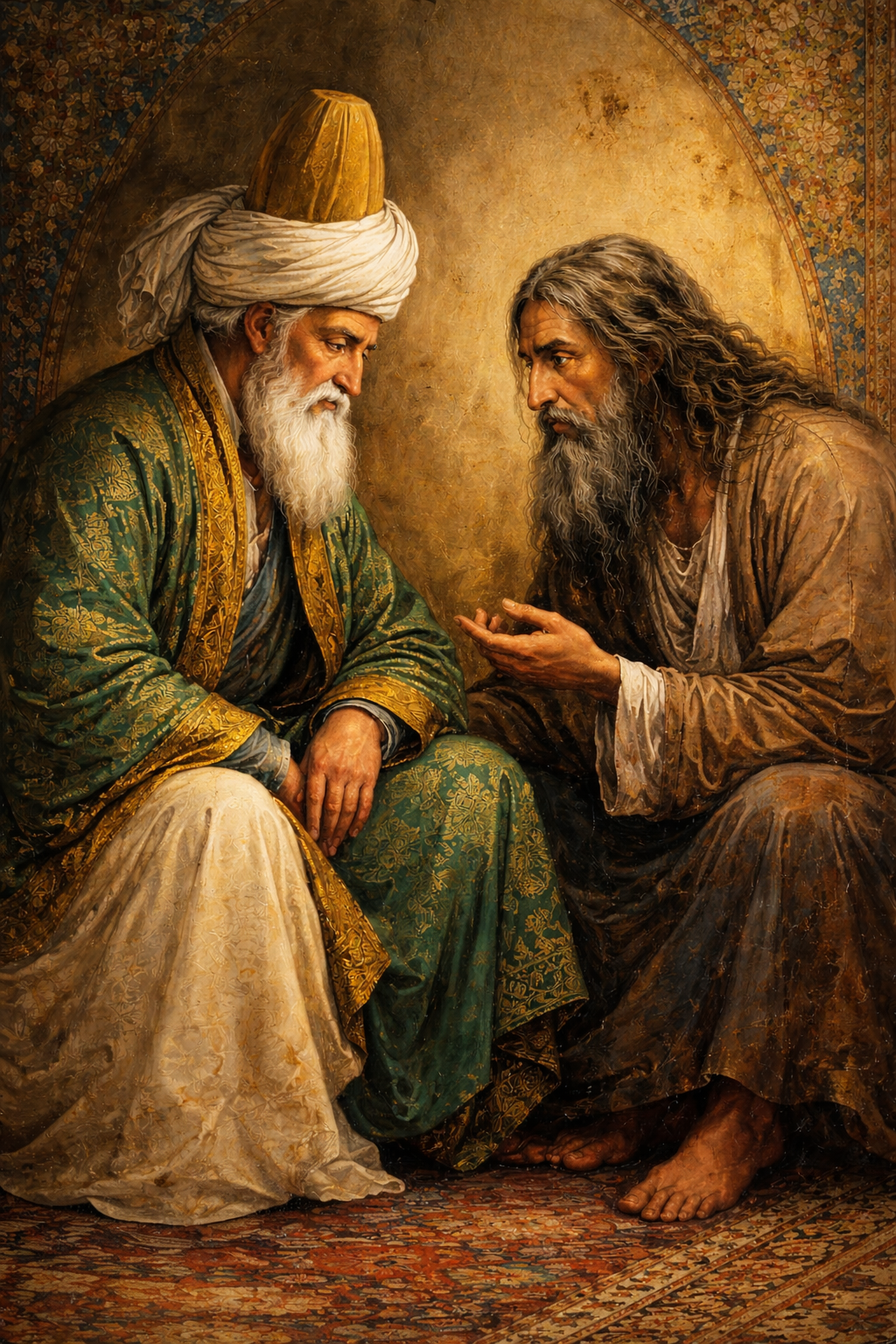
So it was with Rumi and Shams of Tabriz, a wandering Sufi dervish. Rumi, already a respected scholar, stood firmly within tradition—learned, disciplined, admired. Shams arrived like a storm, not to add to Rumi’s knowledge, but to burn through it. Transformation followed, allowing wisdom to augment intellect.
Their bond一part friendship, part spiritual combustion一 made Rumi more alive, not more informed. Poetry replaced doctrine. Music replaced rigidity. Love replaced abstraction. Shams did not teach Rumi; he awakened him.
And that is the quiet, unsettling promise of mentorship: not to make us better versions of who we are, but to make us into someone we do not yet recognize.
If we are fortunate, we will find such a guide.
If we are wise, we will recognize them.
And if we are brave, we will allow ourselves to be transformed. Not polished, but forged.
— Sina.