
Becoming An Übermensch
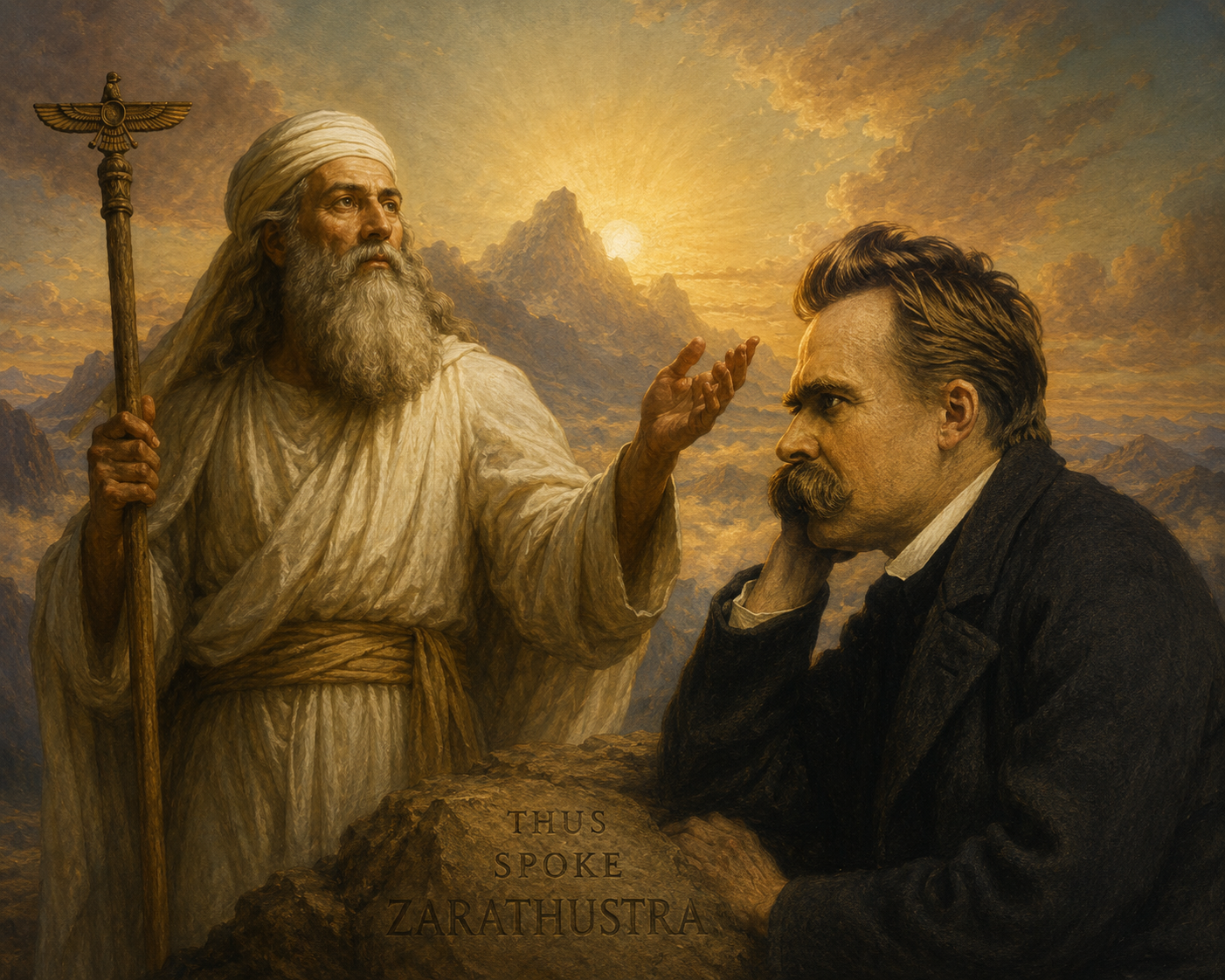
In Thus Spoke Zarathustra, Friedrich Nietzsche uses teachings from the ancient Persian prophet Zarathustra for a series of speeches that blend poetry, parable, and prophecy. Through these teachings, Nietzsche explores themes of self-overcoming, the will to power, and the creation of new values in a world where traditional moral foundations have lost their authority.
Considered a masterpiece of existential philosophy, the book challenges readers to transcend human limitations and embrace their highest potential by leveraging the concept of the Übermensch, or “overman”—the embodiment of humanity’s highest possibilities for strength, creativity, wisdom, and self-mastery.
For Zarathustra, the human condition is a continual struggle between what we are and what we might become. Freedom emerges within this tension between creation and destruction, order and chaos, comfort and aspiration. Human beings are not static creatures but works in progress. Our purpose is to actively participate in our own development through disciplined action, meaningful ritual, and the cultivation of constructive thoughts, words, and deeds.
If we live consciously, the arc of human development carries us from the ordinary person to the higher person, from the higher person to the Übermensch, and ultimately toward a state that borders on the transcendent. The challenge is not to conquer others, but to conquer ourselves.
Zarathustra’s message remains as relevant today as it was when it was written. The highest achievement is not perfection but continual growth. Thomas Jefferson reminded us that it is the pursuit of happiness, not happiness itself, that gives life meaning. Likewise, the value of life lies not in arriving, but in becoming. The journey upward is itself the reward.
— Sina.