
The Weight of the Heart
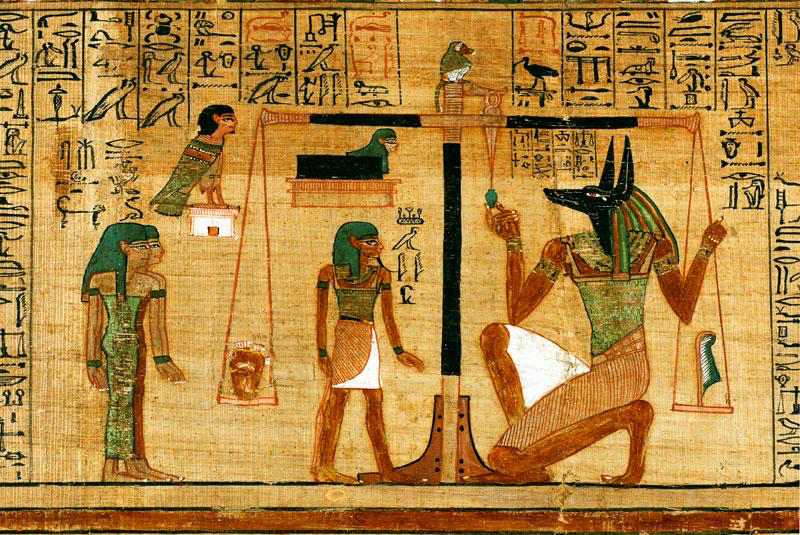
The ancient Egyptians believed that death was not the end of life, but the beginning of a final judgment.
According to their mythology, the dead entered the Hall of Judgment, where Anubis, guardian of the dead, placed the deceased’s heart on one side of a great scale. On the other rested a single feather representing truth, justice, and moral order.
The question was simple: What did your heart weigh?
A heart in balance with the feather was judged worthy of continuing into the afterlife.
Whatever we may think of their mythology, the Egyptians understood something profound: eventually, our actions must be weighed.
We spend much of our lives measuring wealth, achievement, status, possessions, and influence. But these measure what we accumulate, not necessarily who we become. Achievement measures what we have done. Character measures what we have become.
Did we keep our word when breaking it would have been easier? Did we act honorably when no one was watching? Did we treat others with dignity? Did we leave people and places better than we found them?
Perhaps judgment is not a single moment at the end of life, but something cumulative. Every promise kept or broken, every kindness offered or withheld, every act of courage or cowardice adds something to the scale.
City Club strives to be a Securus Locus—a place where members can be themselves without fear of judgment. But that freedom carries a responsibility; if we ask others not to judge us, we must be willing to judge ourselves. The quality of our community depends less on rules than on the character each of us brings through the door.
Perhaps that is the enduring wisdom of the scale: judge others less, and weigh your own heart more carefully.
— Sina.