
The Vitruvian Man
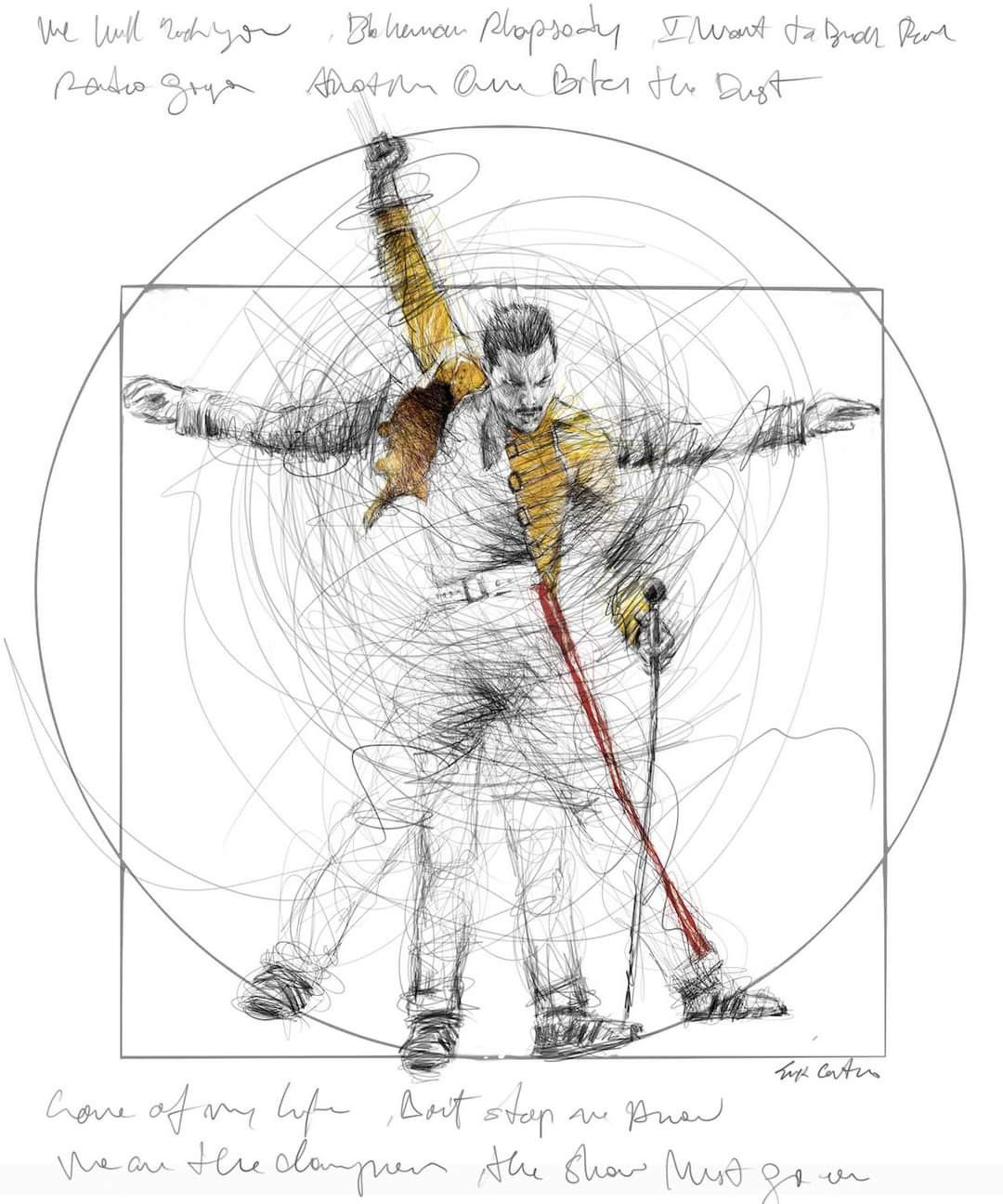
Freddy Mercury as the Vitruvian Man
Around 1490, Leonardo da Vinci drew one of history’s most recognizable images: a naked man, arms and legs extended, simultaneously inscribed within a square and a circle.
Inspired by the Roman architect Vitruvius, Leonardo was exploring the proportions of the human body. Five centuries later, we can reinterpret his question: What is the measure of a fully developed human being?
The square might represent our earthly existence: body, work, reason, discipline, responsibility and boundaries. The circle represents something less measurable: imagination, love, beauty, wisdom, spirit and our longing for transcendence.
Leonardo’s man inhabits both.
Perhaps that is the challenge of becoming fully human—not choosing between the material and spiritual worlds, but learning to live comfortably within both.
Leonardo studied our physical proportions. We might examine our inner ones.
Are ambition and contentment in proportion? Intellect and emotion? Strength and compassion? Individuality and community? Body, mind and spirit?
A person can possess extraordinary wealth, intelligence, power or accomplishment and still be badly out of proportion.
At City Club, we are interested less in what human beings have than in what they might become. Education traditionally adds something to us: knowledge, credentials, skills. Transformation is different. Like the caterpillar entering the chrysalis, sometimes becoming something more requires surrendering something of what we already are.
The purpose of a Securus Locus is to provide a protected space to question our assumptions, encounter different ideas, examine ourselves and shed our old skin.
Leonardo showed us man positioned perfectly between the circle and the square. Perhaps his greater lesson is one he never intended:
The measure of a human being is not merely what we are, but what we have the capacity to become.
— Sina.