
I'm Your Man
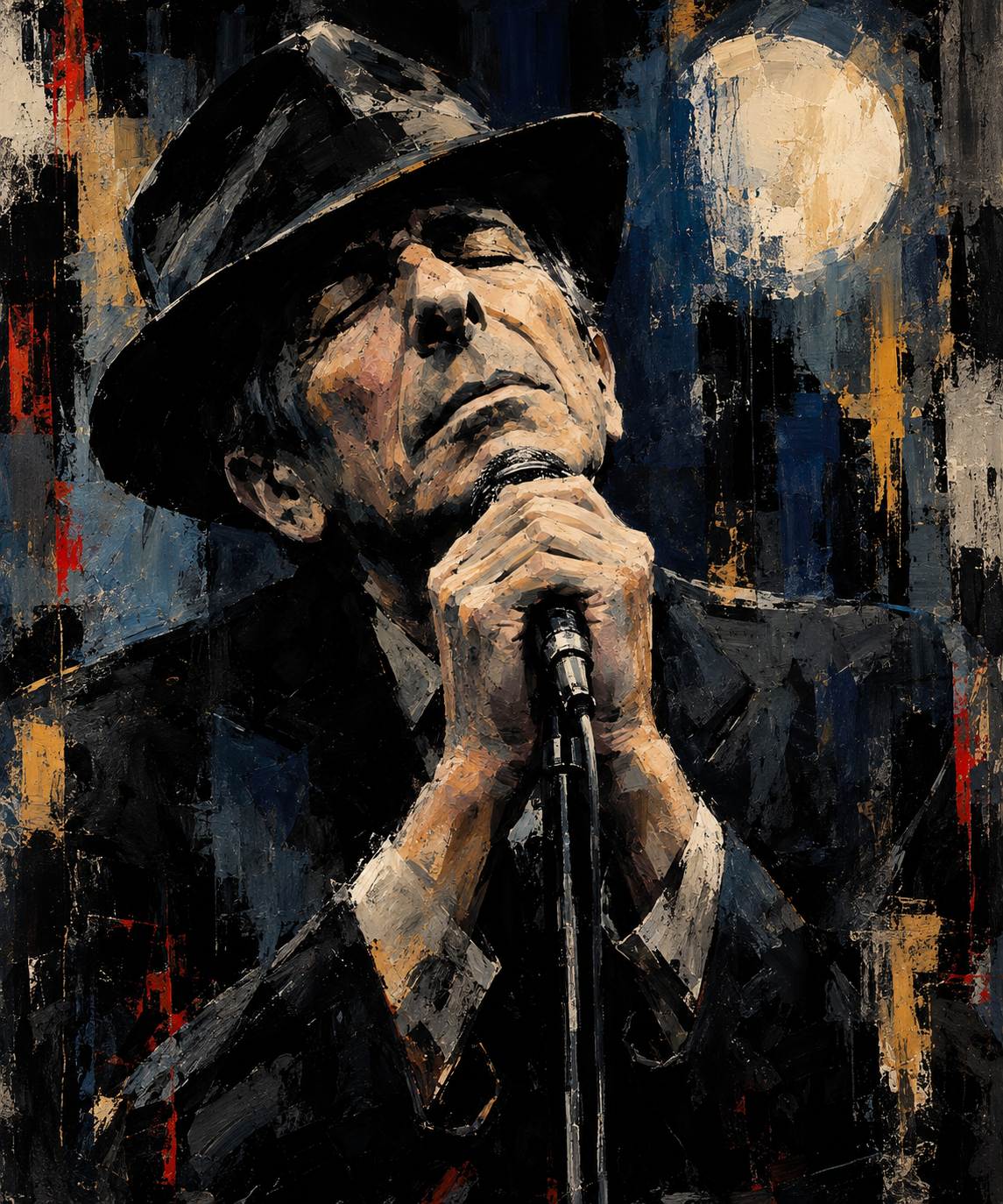
I am a big Leonard Cohen fan and, in the past, have written a column on “You Want It Darker.”
Alas, though a brilliant poet and performer, Cohen was still just a man who, despite decades of studying Buddhism, never quite became the Superior Man, the Vitruvian Man, the Übermensch, or the Supernatural Man I’ve written about before.
Nowhere is this tension more evident than in “I’m Your Man.”
Cohen begins by offering a woman everything. He will be her lover, partner, boxer, doctor or driver. Whatever she wants, he will become.
It is seductive, masculine and vulnerable. But listen more closely and imagine him begging on his knees.
Soon the civilized man begins to disappear. The moon is too bright, the chain too tight, and the beast won’t go to sleep. He would beg, crawl, howl and claw. Desire has conquered the man who promised to become anything for his woman.
But perhaps the Vitruvian Man loves differently.
He contains the lover and the boxer, tenderness and strength, reason and passion, the square and the circle. He contains the beast without being ruled by it.
The Superior Man does not eliminate his primitive nature. He recognizes it, wrestles with it and transforms its enormous energy into something higher.
He can love deeply without surrendering himself. Desire without becoming desperate. Ask without begging. Stand beside his lover without needing her to complete him.
Cohen’s man says: Tell me what you want, and I will become it.
The evolved man says: This is who I am. Walk beside me if you wish.
And yet Cohen’s refrain remains irresistible:
I’m your man.
Perhaps the more evolved man can say something more:
I am my own man—and therefore I can be unconditionally yours.
— Sina.